
| INCI Name | CAS
| Molecular Weight | Molecular Formula | Appearance |
| Nicotinamide Adenine Dinucleotide | 53-84-9 | 663.43 | C21H27N7O14P2 | White to off-white powder |
Product Information
NAD+ (Nicotinamide Adenine Dincleotide) is an essential coenzyme found in all living cells, playing a critical role in energy metabolism, DNA repair, and cellular signaling. As a key regulator of mitochondrial function and sirtuin activation, NAD+ levels naturally decline with age, contributing to metabolic dysfunction, reduced cellular resilience, and accelerated aging. Studies have shown that NAD supplementation provides multiple benefits to the body, including boosting energy metabolism, slowing aging, improving cognitive function, enhancing muscle function, and reducing inflammation.
Mechanism
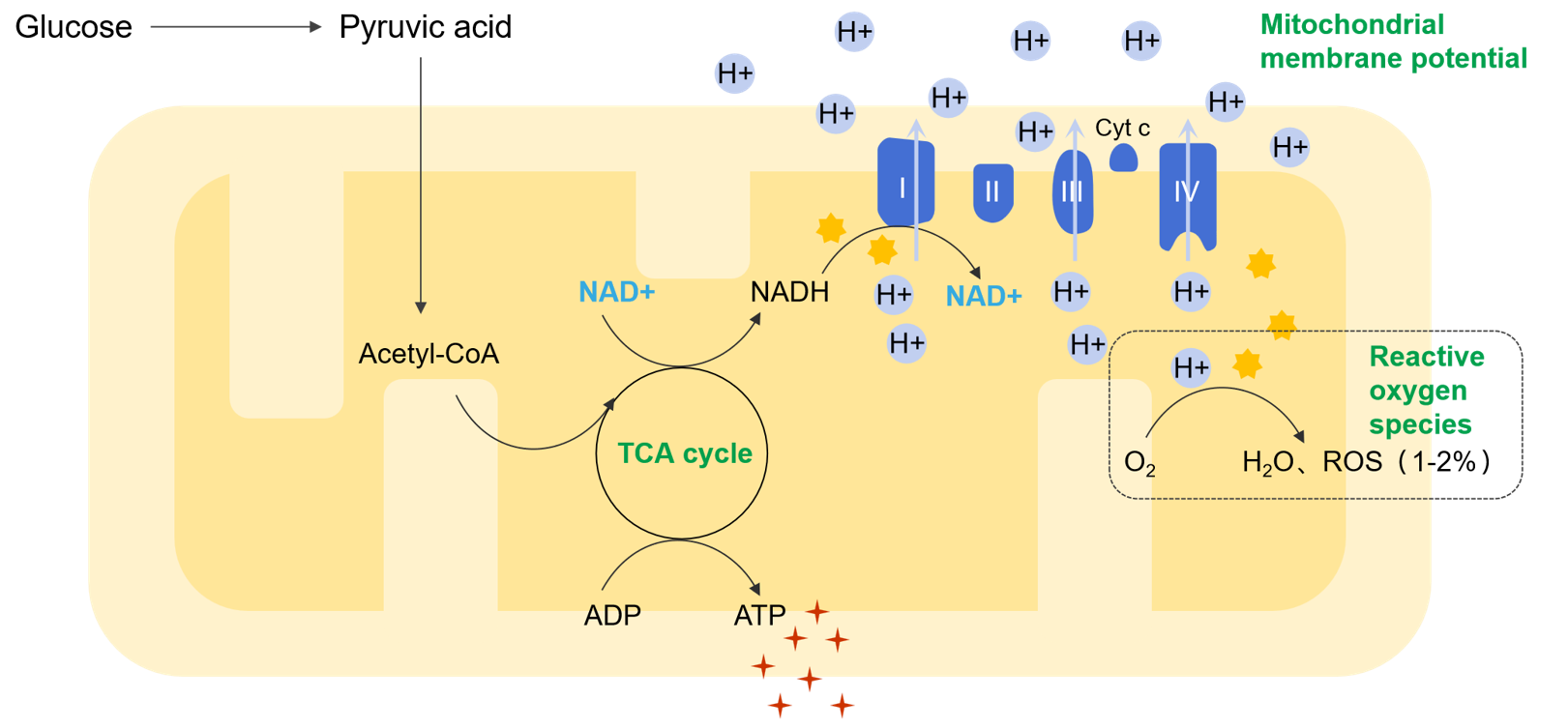
NAD+ boosts ATP by shuttling electrons in mitochondria. It grabs electrons from broken-down nutrients (as NADH) and feeds them into the energy chain, powering tiny pumps that make ATP. This keeps the cellular batteries fully charged.
NAD+ acts like the body’s "energy manager":
✓ Charges cells (increases ATP)
✓ Maintains power stations (protects mitochondria)
✓ Calms firestorms (fights inflammation)
Efficacy
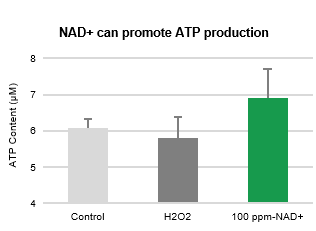
Experiment conditions: Control: Cell culture medium; Model group: H2O2; Test group: 100 ppm NAD+
Result: 100 ppm NAD+ can promote ATP production by 19%.
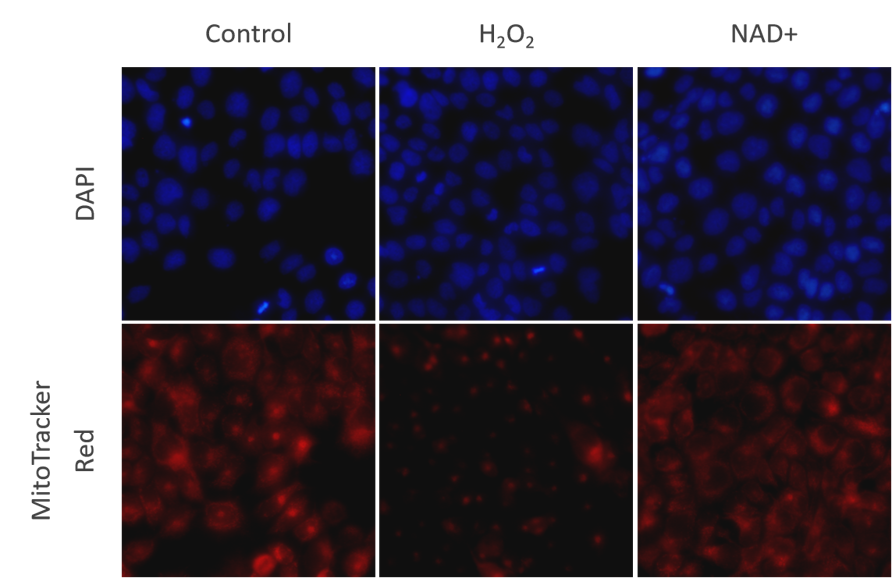
Experiment conditions: Control: Cell culture medium; Negative control: H2O2; Test group: 10 ppm NAD+
Result: 10 ppm NAD+ has a restorative effect on mitochondrial damage.
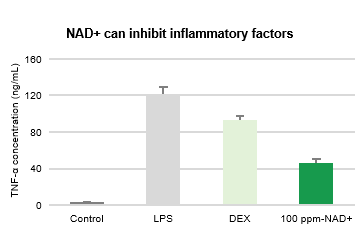
Experiment conditions: Cell: RAW264.7; Control: Cell culture medium; Negative control group: LPS; Positive control group: DEX; Test group: 100 ppm NAD+
Result: 100 ppm NAD+ has an inhibition rate of 62% on TNF-α inflammatory factor.