INCI Name: Carnosine
CAS: 305-84-0
Molecular Formula: C9H14N4O3
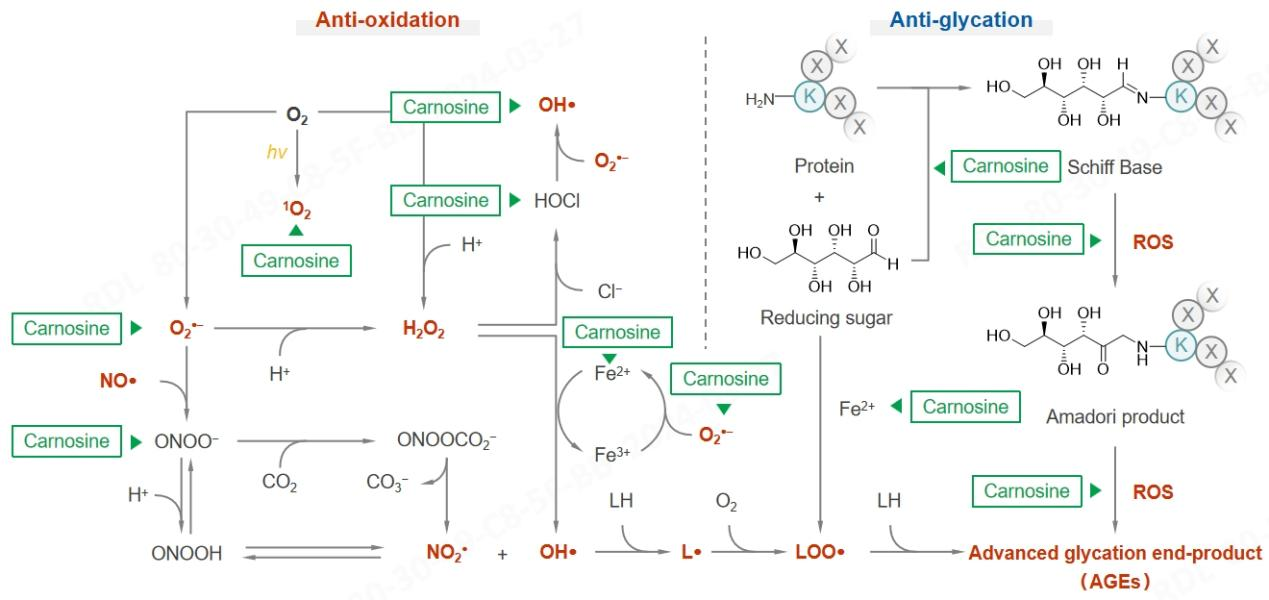
Carnosine is a natural antioxidant that protects skin cells from oxidative damage, and inhibits the formation of advanced glycation end products, thereby improving the symptoms of skin aging.
Product Information:
Carnosine is a natural dipeptide consisting of β-alanine and L-histidine widely found in animal muscle tissue. Studies have shown that carnosine is a highly effective antioxidant that can scavenge various reactive oxygen species (ROS),thereby preventing abnormal cross-linking of extracellular matrix collagen, reducing pigmentation, restoring skin barrier function, and improving the symptoms of skin aging.
Reference:A. Boldyrev et al., Physiol. Rev., 2013, 1803–1845
Safety Test:
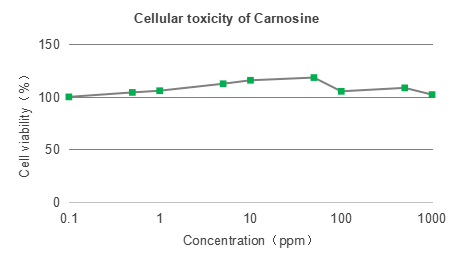
Carnosine showed no significant cytotoxicity within the concentration range tested (0–1000 ppm).

The results of the human patch test showed 0 cases of adverse reactions among 30 subjects.
Efficacy:
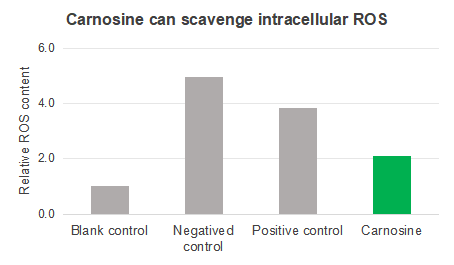
Experiment condition: Human skin fibroblasts; Negative control: UV; Positive control: UV+ vitamin E (0.064 μM); Experimental group: UV+ carnosine (0.064 μM)
※Third-party experimental data
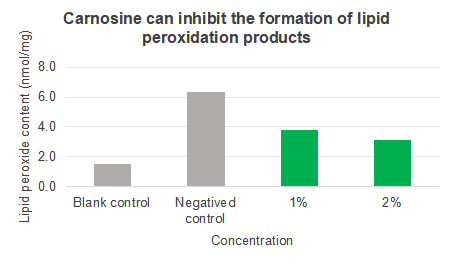
Experiment condition: In vitro experiment; Blank control: linoleic acid; Negative control: Generation of lipid peroxide catalyzed by Fe2+; Experimental group: Fe2++ carnosine
Reference: M. Babizhayev et al., Biochem. J., 1994, 304, 509–516
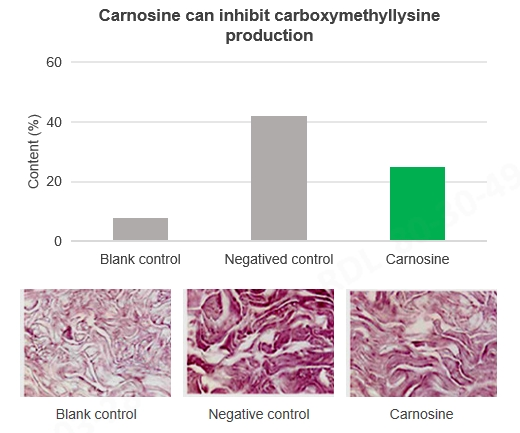
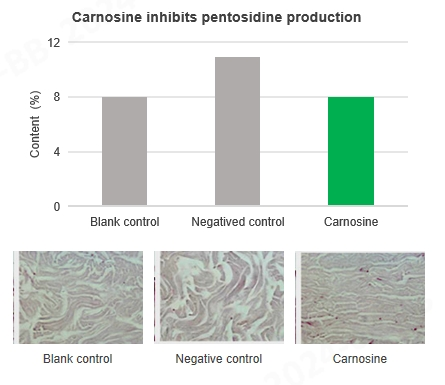
Experiment condition: Human reconstructed 3D skin model; Blank control: Untreated group; Negative control: 10 mM pyruvical; Experimental group: 0.2 % carnosine
Reference: M. Narda et al., Skin Pharmacol. Physiol., 2018, 31, 324–331
Formulation Guidelines:
– Recommended level of use:0.1–1.0 wt%
– Compatibility suggestions: Carnosine is highly soluble in water. Carnosine can form complex compounds with metal ions, therefore ingredients containing Cu2+ and Fe2+ should be avoided.
– Note: It is recommended that temperature should be kept lower than 45 °C during the preparation process and carnosine should be added at the final stage of formulation.